Pool Resurfacing in Centurion: Marbelite and Fibreglass Finishes That Last
Is your pool surface rough, stained, faded, hollow or impossible to keep clean? Then the finish has worn out, and it is time to resurface.
Pool resurfacing replaces the worn inside layer of your pool with a new waterproof finish, in Marbelite or fibreglass. Crispy Pools resurfaces concrete pools across Centurion, and we do it on a shell we have first inspected, repaired and prepared, because a new finish is only as good as what lies beneath it.
This page covers both finishes, how each one is applied and how to choose between them.
What is pool resurfacing?
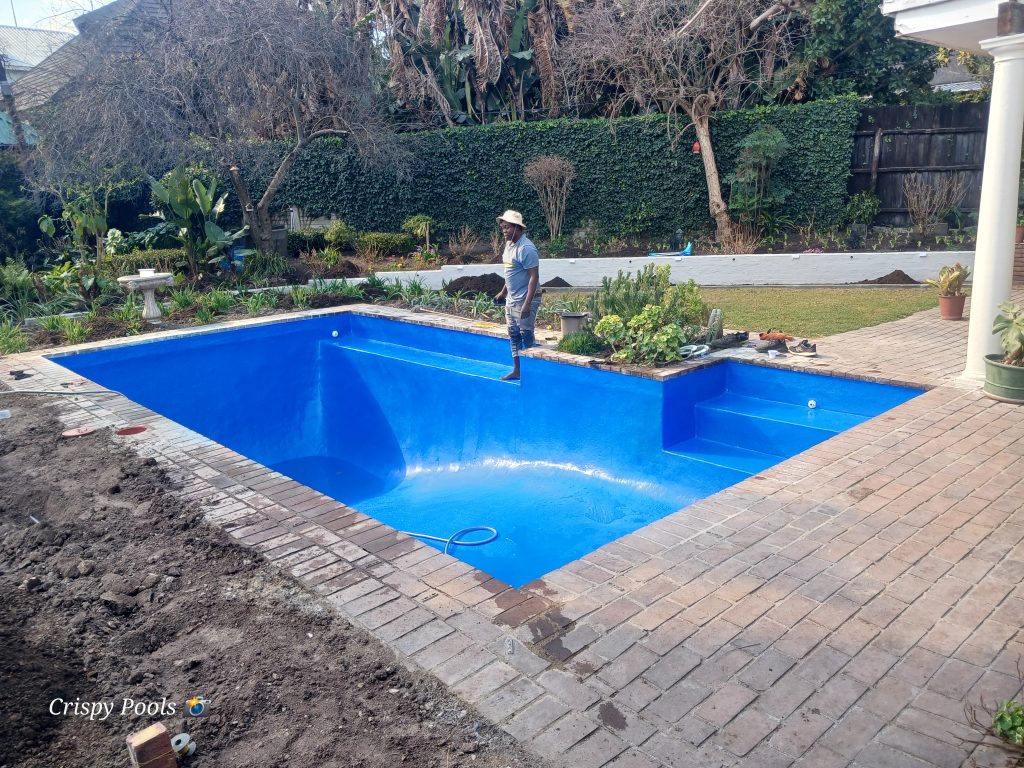
Resurfacing means preparing the worn inside layer of a concrete pool and applying a new finish over the shell. It restores a smooth, comfortable surface, makes the pool easier to keep clean and, with the right preparation, helps stop water escaping through the surface. In Centurion, the two finishes that last are Marbelite and fibreglass. We don’t rely on paint or epoxy, and you will find out why further down.
Resurfacing, relining, renovating or repairing?
The words overlap, so here is how we use them:
- Resurfacing is a new finish over the existing shell, in Marbelite or fibreglass.
- Re-marbelite means applying fresh Marbelite plaster.
- Relining usually means fibreglass, built up in layers of matting and resin over the shell.
- Renovating is a larger planned project that can include resurfacing, remodelling, new coping and tiling and equipment. See our page on pool renovations in Centurion.
- Repairing fixes one specific fault, such as a crack, a leak or a pump. See our page on pool repairs in Centurion.
What resurfacing will not fix
A new surface can’t cure a fault beneath it. Resurfacing stops surface-related water loss only. Plumbing leaks and structural leaks need their own repairs, and structural cracks must be repaired before any finish goes on, or they will split the new surface along the same line.
If your pool is losing water, start with pool leak detection in Centurion. If the shell has cracked, see our structural crack repairs. That is why every resurfacing begins with an inspection of the shell, not a quote over the phone.
Signs your Centurion pool needs resurfacing
Catching these early keeps the job smaller. A failing finish eventually lets water and chemicals reach the shell beneath it.
- A rough or sharp surface that scratches feet and swimwear.
- Staining and fading that cleaning can’t shift.
- Peeling, flaking or hollow patches. A hollow sound when tapped means the finish has lost its bond.
- Cracks showing through the finish. These may point to movement in the shell, so they need a closer look.
- Rising chemical use. Older, porous surfaces absorb chemicals and encourage algae.
- Algae that keeps returning in pitted or rough areas, even with good water care.
- Fibreglass trouble. Fibres lifting, blisters, a squishy feel underfoot or a brittle, chalky gelcoat.
- Slow water loss. A damaged surface can be the cause, although the pool may be losing water somewhere else.
Not sure what you are looking at? Send us photos on WhatsApp and we will tell you whether it is the surface, the shell or something else.
Marbelite resurfacing in Centurion
Marbelite is the classic hard-wearing mineral finish for concrete pools. When yours has turned rough, stained or hollow, re-marbelite replaces it with a fresh surface.
What is Marbelite?
Marbelite is a coloured, marble-based pool plaster applied over the concrete shell. We use Cemcrete PoolCrete, a South African pool plaster the manufacturer has made since 1973. It goes on as a smooth plaster about 6 mm thick and hardens into an integral part of the pool structure.
How we re-marbelite a pool
- Inspection. We check the shell for cracks, hollow areas and movement before anything is ordered.
- Water saved. Your treated water goes into our storage bladders and the pool is drained.
- Preparation. Failed plaster is removed, the surface is prepared and patched, structural cracks are repaired first, and the surface is primed where the manufacturer’s system calls for it.
- Application. PoolCrete is mixed and applied in your chosen colour, to the manufacturer’s specification, by an experienced team. It is not a DIY product.
- Curing underwater. Marbelite cures underwater, so water goes back in within hours of application, typically 4 to 10. We follow the manufacturer’s start-up guide.
- Handover. You receive care instructions, because the first weeks of water balance matter.
Why choose Marbelite
- A classic, natural, slightly textured look
- A hard mineral surface
- Popular colours including white and sky blue, with more available
- A quick return of water to the pool after application
- A strong fit for a sound shell on stable ground
Where Marbelite falls short
Marbelite is porous, so it asks for closer attention to water balance. It is rigid, so ground movement can split it. With proper maintenance, expect 10 to 15 years. The manufacturer notes that correctly applied PoolCrete can last 15 to 20 years when the water is kept balanced, which shows how much upkeep matters.
Best for: structurally sound pools, stable ground and owners who love the traditional finish. If your Marbelite only has a small problem, our Marbelite pool repairs may be all you need.
Fibreglass resurfacing in Centurion
Fibreglass turns a worn concrete pool into a smooth, sealed and flexible shell. It is often called relining. Our page on fibreglass pool lining in Centurion goes into the lining itself, and this section shows how it fits into a resurfacing.
What is fibreglass resurfacing?
Layers of fibreglass matting are bonded with resin to the prepared concrete shell, then finished with a smooth, high-gloss gelcoat. We build it with Scott Bader Crystic and NCS pool resins.
How we resurface a pool in fibreglass
- Inspection. We check the shell for cracks, movement and structural damage.
- Surface preparation. The existing surface is cleaned, sanded and prepared so the fibreglass bonds properly.
- Structural crack repairs. Cracks are reinforced with steel stitching and structural resins before any lining goes on.
- Lamination. Multiple layers of fibreglass matting and resin are built up into a strong waterproof lining.
- Gelcoat. A smooth protective gelcoat forms the final surface.
Most fibreglass resurfacing takes 5 to 7 working days. Your water is stored in our bladders and returned once the lining has cured.
Why Centurion owners choose fibreglass
- It flexes. Fibreglass tolerates the small movements of Centurion’s clay that crack rigid finishes.
- It is smooth and non-porous, so algae struggles to grip and chemical use can come down.
- It is a seamless waterproof barrier over the shell.
- It lasts. Fibreglass typically lasts 15 to 25 years with sensible care.
Converting a Marbelite pool to fibreglass
- This is one of the most common requests we receive. Owners who are tired of rough plaster, algae in the pores and a pool that eats chemicals can switch to fibreglass over the prepared concrete shell. We assess the shell first, repair what needs repairing and then line it.
Resurfacing a pool that is already fibreglass
Fibreglass lasts, but surfaces do age. Fading, a chalky gelcoat, blisters, brittleness and fibres that lift or feel squishy underfoot all mean the surface is failing. Depending on how deep the damage goes, the answer ranges from a surface rejuvenation to a full structural relining, and we tell you which one your pool needs.
Best for: cracked pools, pools on moving ground, owners who want the lowest maintenance and Marbelite pools that have had enough.
Marbelite or fibreglass: which should you choose?
Both finishes are good. The right one depends on your pool, so ask yourself these questions.
Has the pool cracked or leaked before? If so, lean towards fibreglass, which flexes where Marbelite splits.
Does your property sit on moving clay? Fibreglass copes with seasonal ground movement better than a rigid plaster.
How much upkeep do you want? Fibreglass is the lowest maintenance. Marbelite asks for closer attention to water balance.
What look do you prefer? Marbelite gives a natural, textured mineral finish. Fibreglass gives a smooth, glossy one.
How do you weigh cost against lifespan? Fibreglass costs more at the start and typically lasts longer, so the cost per year of use can end up lower. Our pool prices page shows current figures for both.
Our verdict for Centurion
If the pool has needed work before, or sits on clay, we usually recommend fibreglass. If the shell is sound, the ground is stable and you love the traditional finish, Marbelite is a good choice. We inspect before we recommend, and we won’t up-sell you to the more expensive option.
Why we don't resurface with paint or epoxy
Paint is only a stop-gap for appearance, and epoxy often blisters within two years. A cheaper quote built on either usually means paying again soon, so we focus on Marbelite and fibreglass, which are built to last.
Marbelite or fibreglass: which should you choose?
- Free assessment. We inspect the shell and the surface, look for cracks and movement, and talk you through the finish options.
- Written quote. You receive a clear, itemised quote before anything starts.
- Your water is saved. We own our fleet of storage bladders, so there are no storage rental fees. Your treated water is stored on site and returned after resurfacing.
- Preparation. The pool is drained and the old finish is prepared. We don’t simply cover old surfaces, because a poor bond is the commonest reason a new finish fails early.
- Structural repairs where needed. Cracks are reinforced before the finish goes on.
- Application. Your chosen Marbelite or fibreglass finish is applied and left to cure.
- Refill and handover. Your stored water goes back in. You receive care instructions and a written workmanship warranty.
Most resurfacing jobs take 5 to 7 working days, depending on the size and condition of the pool and the weather.
Why Centurion's ground matters when you resurface
Centurion’s expansive clay swells in the wet season and shrinks in the dry. That movement puts pressure on older pool shells and is a common reason rigid finishes crack, go hollow and fail.
Water loss adds to the problem. A leaking pool saturates the soil around it, and parts of Centurion sit on dolomite, which is sensitive to water getting into the ground. If your pool is losing water, find out where it is going before you resurface, with our pool leak detection in Centurion. If the shell has moved, deal with it first through our structural crack repairs.
That is why we assess the shell before we recommend a finish, and why we choose flexible fibreglass where movement is likely.
Pool resurfacing costs and quotes
The price of a resurfacing depends on the size and depth of the pool, the finish you choose, the condition of the shell, any extras such as waterline mosaic, and access to your property. Every quote we give is free, written and itemised after an on-site inspection, so you can see exactly what you are paying for.
For typical price ranges, what a good quote should include and what repairs and renovations cost, see our pool prices and quotes page for Centurion.
Recent project: from rough Marbelite to fibreglass in Eldoraigne
The problem. The pool had a rough, faded Marbelite finish with visible cracking and a high demand for chemicals.
What we did. We completed the structural preparation, repaired the weak areas and installed a new fibreglass finish using premium resin systems.
The result. The homeowner received a smooth, modern finish, a lower-maintenance surface and a pool that looks renewed.
What our clients say

Why Centurion homeowners choose Crispy Pools for resurfacing
We recommend by condition.
Your advice is based on your pool’s actual condition, your budget and how long you plan to keep it.
We recommend by condition.
Our structural background helps us find hidden problems before resurfacing begins.
Direct supervision.
Chris personally supervises major works, so standards stay consistent from preparation to the final finish.
Premium materials.
Scott Bader and NCS resins for fibreglass, and Cemcrete PoolCrete for Marbelite.
Construction-grade preparation
We prepare the shell properly to improve bonding and long-term durability.
Zero water storage rental fees.
We own our fleet of bladders, so you keep your treated water without a rental charge.
A written workmanship warranty
on every project.
Where we resurface pools
Estates: Midstream, Copperleaf, Southdowns, Centurion Golf Estate and Heritage Hill.
Suburbs: Eldoraigne, Wierda Park, Lyttelton, Highveld, Die Hoewes, Rooihuiskraal, The Reeds, Amberfield, Raslouw, Irene and Pierre van Ryneveld.
Based nearby but not on the list? Message us. We work across Gauteng.
Pool resurfacing in Centurion: your questions answered
What is the difference between pool resurfacing and relining?
Resurfacing is the general term for a new finish over the shell, in Marbelite or fibreglass. Relining usually means the fibreglass version, built up in layers of matting and resin.
Is fibreglass better than Marbelite?
Can a cracked pool be resurfaced?
Does resurfacing stop a leak?
Only a leak through the surface. Plumbing leaks and structural leaks need separate repairs, so we find the source of any water loss before resurfacing.
Can I convert my Marbelite pool to fibreglass?
Yes. It is a common request. After we inspect and prepare the shell, fibreglass can be applied over the concrete, giving you a smooth, non-porous, lower-maintenance surface.
My fibreglass pool is fading or blistering. Can it be resurfaced?
Usually, yes. We assess how deep the damage goes and recommend either a surface rejuvenation or a full relining.
How long does resurfacing take?
Most jobs take 5 to 7 working days, depending on the size and condition of the pool and the weather.
How long does a resurfaced pool last?
Fibreglass typically lasts 15 to 25 years. Marbelite typically lasts 10 to 15 years, and longer when the water is kept well balanced.
Do I have to drain the pool?
Yes, resurfacing needs a dry shell. We store your treated water in our own bladders and return it after the finish has cured, so nothing is wasted.
When can I swim again?
Marbelite cures underwater, so water goes back in within hours of application. We tell you exactly when it is safe to swim and how to look after the water in the first weeks.
Can I change my pool's colour?
Yes. Marbelite comes in white, sky blue and further colours, and fibreglass is available in a range of colours too. We talk you through the options at your assessment.
Do you resurface pools inside estates?
Yes. We are familiar with the access, security and contractor rules of Centurion estates, including Midstream, Copperleaf, Southdowns, Centurion Golf Estate and Heritage Hill.
Book your free pool surface assessment in Centurion
A worn finish only gets harder to fix. Book a free, no-obligation inspection and we will tell you what your pool needs, which finish suits it and what to do first, then give you a written quote.
- WhatsApp: 076 328 9545
- Call: 076 328 9545
- Email: sales@crispypools.co.za
For a head start, send your suburb, your pool’s approximate length, width and depth, and a few clear photos of the surface, any cracks and the pump room. We can usually give you a first opinion before we visit.