Fiberglass vs. Marbelite: Choosing the Best Pool Resurfacing Option for Your Gauteng Pool

A Detailed Comparison of Pool Surfaces for Durability, Cost, and Maintenance

Is your Gauteng swimming pool starting to look worn, rough, or stained?
Over time, pool surfaces naturally deteriorate. The finish can become rough, develop discoloration, or even begin allowing small leaks.
When it comes to resurfacing, two popular options stand out: fiberglass lining and marbelite.
Both finishes offer advantages depending on your budget, maintenance expectations, and the long-term durability you want from your swimming pool.
Understanding the differences between these two finishes helps homeowners make a better long-term investment decision.
Many resurfacing projects also require draining the pool, but professional contractors can store the pool water safely using temporary storage systems to avoid costly refills.
 
Marbelite is a traditional pool plaster finish composed of white cement, marble dust, and sometimes colour pigments.
It has been widely used in swimming pools across Gauteng and South Africa for decades and remains popular due to its cost-effectiveness and classic appearance.
Advantages of marbelite include:
• traditional swimming pool appearance
• customizable colour finishes
• widely used in South African pools
However, marbelite is a porous surface, which means it requires more maintenance and can become rougher over time.
Fiberglass lining involves applying layers of fiberglass matting saturated with resin over the existing pool surface.
A durable gelcoat finish is then applied to create a smooth, non-porous, waterproof surface.
This creates a seamless protective barrier that significantly reduces algae growth, maintenance, and water loss.
Fiberglass resurfacing has become increasingly popular in Gauteng due to its long lifespan and low maintenance benefits.

Head-to-Head: Fiberglass Lining vs. Marbelite

Fiberglass Lining: Modern & Low Maintenance
crispy-pools-leaking-fiberglass-pool-repaired-paving-pipes-jgp
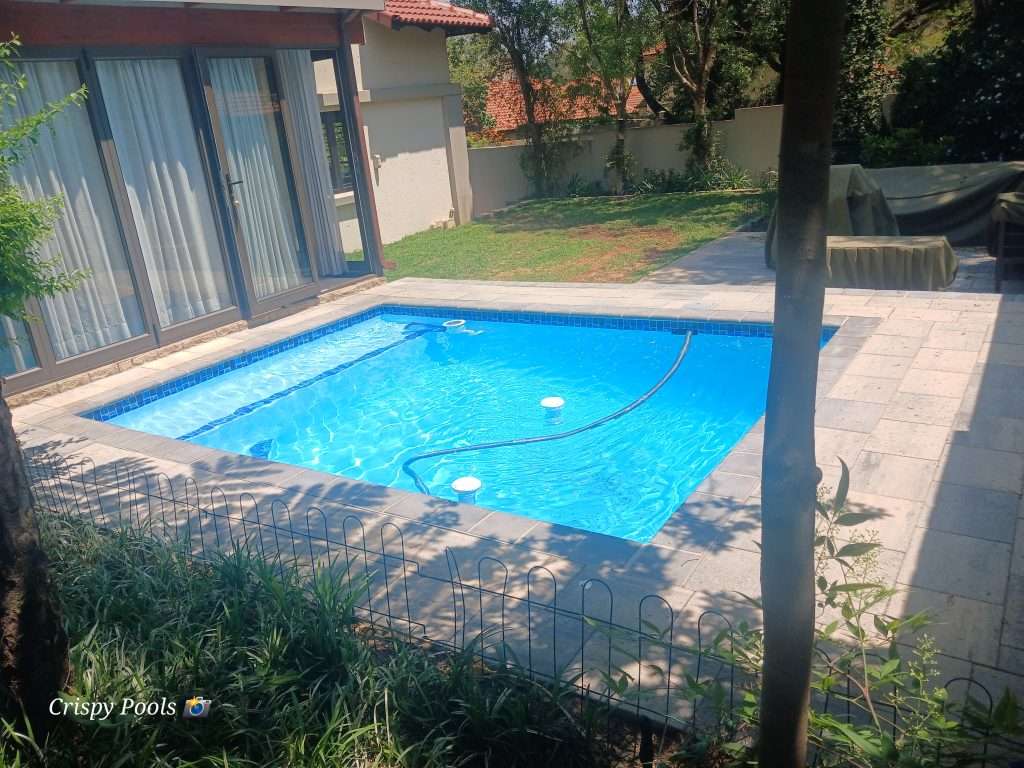
Fiberglass lining is ideal for homeowners who prioritize longevity and easy pool maintenance.
Durability
  • Excellent resistance to cracking, chipping, and general wear.
Lifespan
  • Typically 15 – 25+ years.
Maintenance
  • Very low maintenance because algae does not easily attach to the smooth surface.
Leak Prevention
  • Creates a seamless waterproof barrier.
Surface Texture
  • Smooth and comfortable for swimmers.
Saltwater Compatibility
  • Highly resistant to saltwater corrosion.
Installation Time
  • Usually 2 – 5 days.

Marbelite: Classic & Cost-Effective

marblite-pool-new-concrete-crispy-pools-image-jgp
Marbelite remains a popular option for homeowners who prefer a traditional pool finish.
Durability
  • Good durability but may develop hairline cracks.
Lifespan
  • Typically 8 – 15 years.
Maintenance
  • Requires regular brushing and careful chemical balancing.
Leak Prevention
  • Good initially but cracks may allow water loss over time.
Surface Texture
  • Natural textured finish which may become rougher as it ages.
Saltwater Compatibility
  • Compatible but more sensitive to chemical imbalance.
Installation Time
  • Typically 5 – 10 days depending on curing time.

Fiberglass vs Marbelite – Quick Comparison

✔ 15–25+ year lifespan
✔ Smooth non-abrasive surface
✔ Very low maintenance
✔ Excellent leak protection
✔ Highly saltwater compatible
✔ Strong waterproof barrier
✔ Lower initial resurfacing cost
✔ Traditional swimming pool appearance
✔ Natural textured finish
✔ Moderate durability
✔ Higher maintenance requirements
✔ Shorter resurfacing cycle
Some swimming pools develop structural cracks or movement in the pool shell over time.
In these situations, simply applying a cosmetic finish may not solve the underlying problem.
Fiberglass lining is often recommended for pools that have experienced:
• recurring hairline cracking
• ground movement
• persistent water leaks
Fiberglass creates a reinforced waterproof layer that helps protect the pool structure and prevent recurring leaks.

How Structural Pool Cracks Are Repaired Before Fiberglass Installation

At Crispy Pools, resurfacing is never treated as a cosmetic upgrade. Before fiberglass lining is installed, the structural condition of the pool shell is carefully inspected.

If cracks are present, they are repaired using steel crack stitching and structural reinforcement techniques.

Steel stitching stabilizes the concrete structure and prevents cracks from spreading further.

After crack repair:

fiberglass layers are installed over the repaired area
• additional fiberglass reinforcement is applied over stitched sections
• the pool is sealed with a durable gelcoat finish.

This process creates a strong waterproof surface designed to last for many years.

Saving Your Pool Water During Renovations

Many pool resurfacing projects require the pool to be drained before repairs or resurfacing can begin.
For large swimming pools, this can mean losing tens of thousands of litres of treated water, which can lead to expensive municipal refill costs.
Crispy Pools offers a major advantage during renovations.
Instead of wasting your pool water, we use temporary on-site water storage bladders to safely store the water while work is completed.
This allows homeowners to:
• avoid large municipal refill costs
• conserve thousands of litres of water
Because we own our own water storage bladders, homeowners avoid the expensive rental fees that many contractors charge.
 

Experienced Supervision on Every Pool Renovation

Every major resurfacing or structural repair project is personally supervised by Chris, who brings more than 15 years of hands-on construction and pool renovation experience.
 
Direct supervision ensures that:
 
structural issues are correctly identified before resurfacing
crack stitching repairs are done properly
fiberglass layers are applied correctly
• the final finish meets professional standards
 
This level of supervision helps prevent the common problems that occur when resurfacing is treated as a simple cosmetic upgrade.
 
With the right structural preparation and careful installation, a resurfaced pool can provide many years of reliable performance.
Ultimately, the best resurfacing choice depends on your priorities as a homeowner.
Longevity & Maintenance
Fiberglass generally lasts longer and requires less maintenance.
Budget Considerations
Marbelite has a lower upfront cost but may require resurfacing sooner.
Water Conservation
Fiberglass creates a seamless waterproof barrier that can reduce water loss.
Saltwater Pools
Fiberglass performs extremely well in saltwater systems.
Property Value
A durable, modern pool surface can improve the appeal and usability of your swimming pool.
 
If your swimming pool surface is rough, stained, cracked, or leaking, resurfacing may be the best way to restore it.
 
Chris from Crispy Pools can inspect your pool and recommend the most suitable resurfacing solution based on your pool structure and renovation goals.
 

FAQ Fiberglass vs Marbelite in Gauteng

Fiberglass creates a non-porous waterproof surface that resists algae growth, staining, and structural deterioration.

Yes. Fiberglass is often installed after structural crack repairs because it forms a reinforced waterproof layer over repaired areas.

Yes. Many older marbelite pools are resurfaced with fiberglass lining during renovations.

Fiberglass generally requires less maintenance because algae does not easily attach to the smooth surface.