Pool owner's guide

Pool Owner's Guide for Gauteng: Water Balance, Seasonal Care, Warning Signs and When to Call a Builder

This pool owner's guide for Gauteng gives you the plain-English answers pool owners ask us most: how to keep the water balanced, what changes with the seasons, which warning signs matter and when a problem is a job for a builder. A Gauteng pool is a joy for most of the year and a worry for the rest, and this guide comes from a construction company that repairs and renovates pools.

Chris personally supervises major projects and is involved from quote to handover, and our assessments and written quotes are free, with honest advice and no obligation. If anything here sounds like your pool, send us a photo on WhatsApp.

  • Free on-site assessment
  • Written quote
  • No obligation
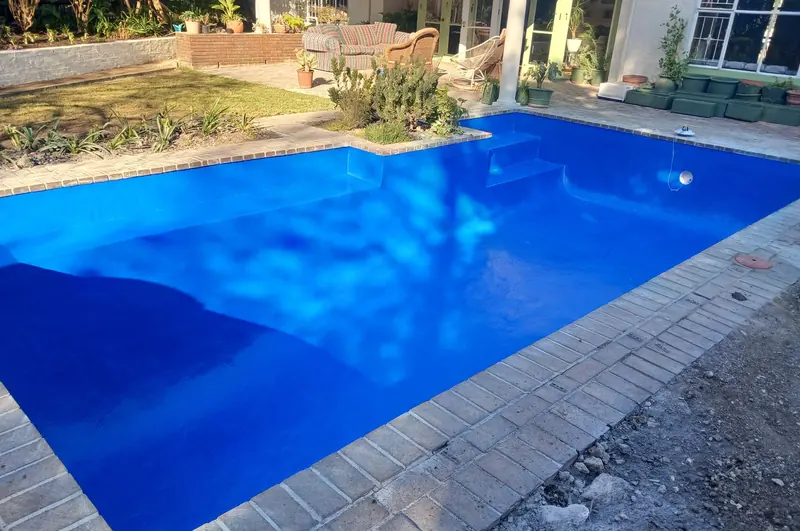
Swimming pool with a freshly applied deep cobalt blue finish and built-in steps, edged with brick paving, beside a house with a covered seating area and bare ground at the right
Gauteng
Your free quote in three steps
  1. 1
    Message ChrisSend your suburb, a short description and a few photos.
  2. 2
    Free on-site assessmentWe look at the pool and give you honest advice on what it needs.
  3. 3
    Written quoteA clear scope and price, with no obligation.
Get a quick estimate

Two minutes, no obligation.

info@crispypools.co.za
Chris personally supervises major projects and is involved from quote to handover.
Building since 2008Backed by Crispy Construction
Chris supervises major projectsQuote to handover
Every project warranted5-year fibreglass, 3-year Marbelite
Free on-site water storageOn suitable projects
Free quotes, honest adviceNo obligation

Five things every pool owner should check

A few minutes of looking each week catches most problems while they are still small.

The water level

A level that keeps falling when nobody is swimming is worth testing. Run the 24-hour bucket test before you assume it is evaporation. See why is my pool losing water.

Chemical balance

Balanced water protects your finish, your equipment and your swimmers. Test weekly, and after heavy rain, a party or a heatwave.

Circulation and filters

Empty the skimmer and pump baskets, check the filter pressure and listen to the pump. Clear water starts with water that moves.

The surface

Look for rough patches, stains, loose areas, cracks and blisters, and photograph anything new. Early notice keeps repairs small.

The ground and paving

Damp, soft or sinking paving, or a wet pump room, can mean water is escaping somewhere you can't see. Keep people away from soft or sinking ground and message us.

Water balance in plain English

Water balance is a handful of numbers working together. Get them right and the water stays clear, the chlorine works, the finish lasts and the equipment is protected. These are typical targets for a residential pool, and we confirm the right numbers for your finish and your sanitiser.

Test weekly, and after heavy rain, a party or a heatwave. Calcium hardness matters most for the finish: water that is too soft can etch a Marbelite surface, and water that is too hard can leave scale on surfaces and equipment, so ask us for the range that suits your finish.

  • pH, 7.2 to 7.6: how acidic or alkaline the water is. Too low irritates swimmers and attacks surfaces and fittings, and too high makes chlorine less effective and encourages scale.
  • Total alkalinity, 80 to 120 ppm: steadies the pH so it doesn't swing.
  • Free chlorine, 1 to 3 ppm, or as your salt system instructs: the sanitiser that keeps the water safe.
  • Stabiliser (cyanuric acid), 30 to 50 ppm: protects chlorine from the sun.
  • Calcium hardness: protects the finish, and the right range depends on the finish.

Seasons on the Highveld

Summer

Strong sun burns chlorine off faster, evaporation rises and thunderstorms dilute the water. Test weekly and after heavy rain, a party or a heatwave, and keep the level above the skimmer opening.

Autumn

Leaves clog the skimmer and pump baskets, so empty them more often and brush the walls and floor before debris stains the surface.

Winter

Highveld frost damages exposed pipework, valves and filter housings first, so protect them. Lower use means lower chemical demand, but the water still needs circulation and testing.

Spring

Check the equipment before the swimming season, review the pump schedule and test the water. If the pool needs repairs or a new finish, book them early so the pool is ready before the heat.

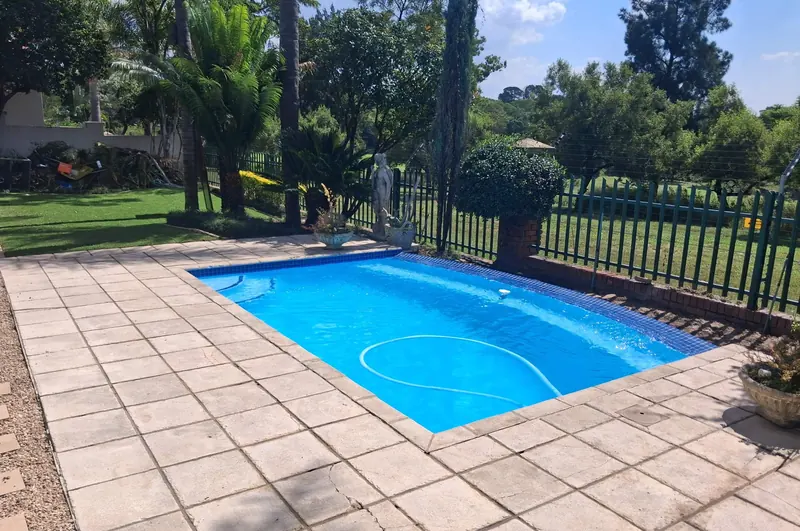
Swimming pool with a bright blue finish and blue mosaic tiles, square paving slabs, a statue and a green palisade fence with open green space beyond
A bright blue finish in an established gardenA fresh finish and new tiles bring an established garden pool back to its best. Read more about pool resurfacing in Gauteng.
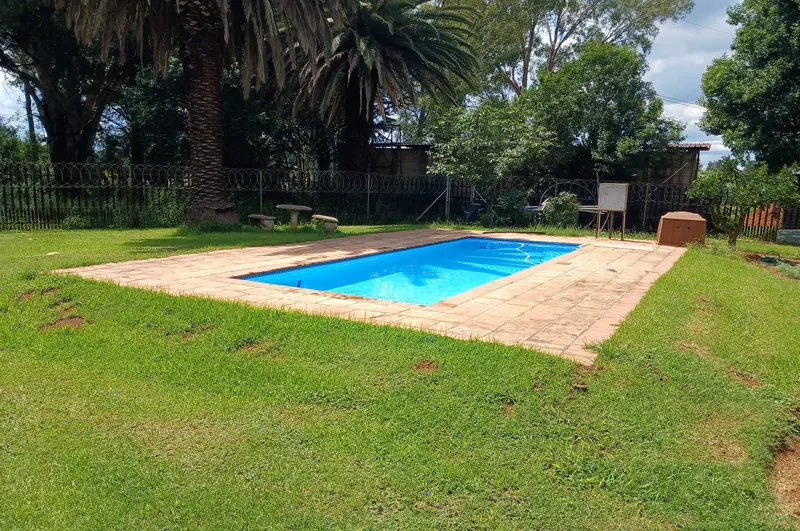
Small rectangular swimming pool with bright blue water and a wide sandstone paving border, set in a large lawn under palm trees
A small pool in a big gardenA neat paved border and a bright clean finish suit a small pool in a large garden. Read more about new pools in Gauteng.

Warning signs and what they usually mean

A falling water level

A level that drops when nobody is swimming, or stops at the same height each time, points to a leak. Run the bucket test, then read why is my pool losing water.

Cloudy or green water

Often a circulation, filtration or balance problem: a tired filter, a pump that isn't running long enough or chemistry that has drifted. Check the balance and the filter pressure first. If it won't clear, message us. See pool maintenance.

A rough, stained or blistered surface

Roughness and stains usually mean a finish that is wearing out. A blister is a raised bubble in a fibreglass finish, often caused by moisture that has found its way behind the surface. One small blister is not an emergency, but send us a photo so we can tell you whether it needs repair.

Cracks

A crack that reaches below the waterline lets water out, and a shell that is still moving widens it. Cracks need a structural repair before any finish goes on. See structural crack repair.

A noisy pump or air in the lid

Grinding usually means worn bearings. Bubbles in the lid or the returns mean air is getting in on the suction side, and a new pump won't fix a suction-side leak. See pool pumps and filters.

Damp, soft or sinking ground

Water escaping from a pool gets into the ground, and some Gauteng ground is sensitive to that. Keep people away from soft or sinking ground and message us. We repair pools and we are not geotechnical engineers.

Repair, resurface or renovate?

Most pool jobs fall into one of three groups, and knowing which one yours belongs to helps you judge any quote. Thinking of a pool that doesn't exist yet? See new pools.

Repair

One thing is wrong: a crack, a leak, a failing pump. We find the cause and fix it, and we leave sound work alone. See pool repairs.

Resurface

The shell is sound but the finish is worn, rough, stained or letting water through. The finish goes on only after the shell is repaired. See pool resurfacing.

Renovate

Several things need attention, or you want to change the pool: a new shape, coping, equipment and finish, planned together with the structure first. See pool renovations.

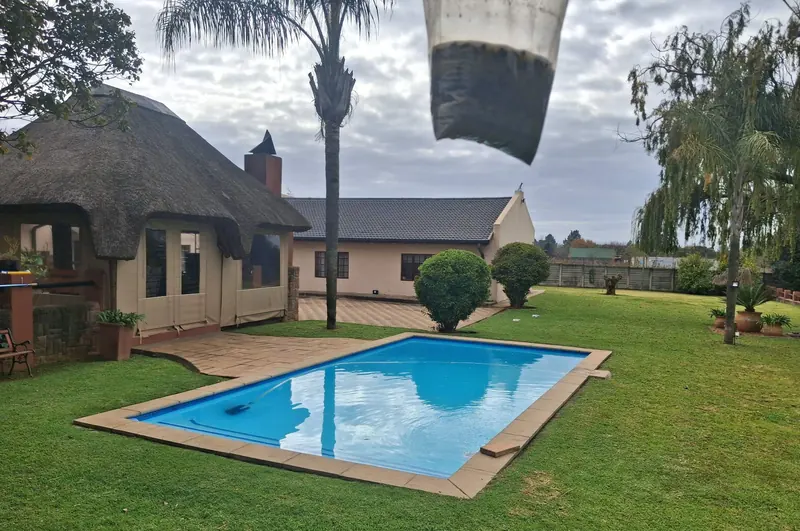
Rectangular swimming pool in a large lawn beside a thatched entertainment area, with a pool cleaner working in the water

A clear pool in a big garden

Clear water, clean edges and a cleaner at work: a pool that is looked after.

Choosing a finish: Marbelite or fibreglass

Marbelite is the classic mineral finish, a hand-troweled plaster of crushed marble about 6 mm thick. It is rigid and suits stable, flat ground. Fibreglass is a smooth, sealed lining built in layers and finished in a UV-stable gelcoat, and it flexes with small movements in the ground, which is why it works well on Gauteng clay.

Both finishes work well when the shell is sound and the water is balanced, and both need the care described in your handover guide. For a full comparison of look, lifespan, ground movement, upkeep and cost, see fibreglass versus Marbelite, and for what goes into each, see our materials.

Pool owner questions: your answers

How often should I test my pool water?

Weekly, and after heavy rain, a party or a heatwave.

How much water loss is normal?

A hot Gauteng summer can take a few centimetres off an uncovered pool in a week, and splash-out and backwashing add to it. A pool you top up every few days is losing too much, and the bucket test tells you which it is. See why is my pool losing water.

Why is my pool green?

Usually a sanitiser or circulation problem: not enough free chlorine, a tired filter or a pump that isn't running long enough. Check the balance and the filter first. If the water won't clear, we offer green pool recovery. See pool maintenance.

What causes blisters in a fibreglass pool?

A blister is a raised bubble in the finish, often caused by moisture that has found its way behind the surface. A single small blister is not an emergency, but don't ignore it. Send us a photo and we will tell you whether it needs repair.

Should I drain my pool to repair it?

Not by yourself. An empty concrete pool can be pushed up or cracked by groundwater pressure, and you lose water you have paid for. When we have to empty a pool, we store your treated water on site in our own bladders, free on suitable projects. See free pool water storage.

How long does a pool finish last?

It depends on the pool, the water balance and the ground. Marbelite typically lasts 10 to 15 years and fibreglass 15 to 25 years. See fibreglass versus Marbelite.

When is a pump worth repairing?

If the fault is a seal, a bearing or a capacitor, a repair often makes sense. If the pump is old, power-hungry and has failed before, replacing it with a variable-speed model usually works out better. See pool pumps and filters.

How do I choose a pool contractor?

Ask for the materials by brand, how the shell will be prepared, how cracks will be repaired, what is warranted in writing and who supervises the work. See our materials.

How much will it cost?

It depends on the pool, so we assess first and give you a written quote. For typical figures and what moves the price, see pool prices in Gauteng.

Is the first assessment free?

Yes. Our on-site assessment and written quote are free, with honest advice and no obligation.

Go deeper

The handover guideThe care guide every client receives: warranty, first weeks, water balance and who to call.
Why is my pool losing water?Evaporation or a leak? How to run the 24-hour bucket test and what to do next.
Fibreglass vs MarbeliteFibreglass or Marbelite? A plain-English comparison of look, lifespan, ground movement, upkeep and cost.
Pool maintenance in GautengPool maintenance and green pool recovery across Gauteng.
Pool prices across GautengWhat renovations, repairs and resurfacing cost across Gauteng, and what moves the price.
The materials we useThe resins, plasters and equipment we use, and why they last.
Free quote

Get a free assessment of your pool

If something in this guide sounds like your pool, send Chris a photo and a short description. We will tell you what we think is happening, find the real cause at a free on-site assessment and give you a written quote with no pressure.

  • Free on-site assessment
  • Written quote
  • No obligation

For a head start, send your suburb or estate, a few photos of the pool and a line or two on what is bothering you.

WhatsApp Chris Now!Call Chris Today: 076 328 9545Get a quick estimateinfo@crispypools.co.za

Serving Pretoria, Centurion, Midrand, Sandton, Randburg, the East Rand and the West Rand.